
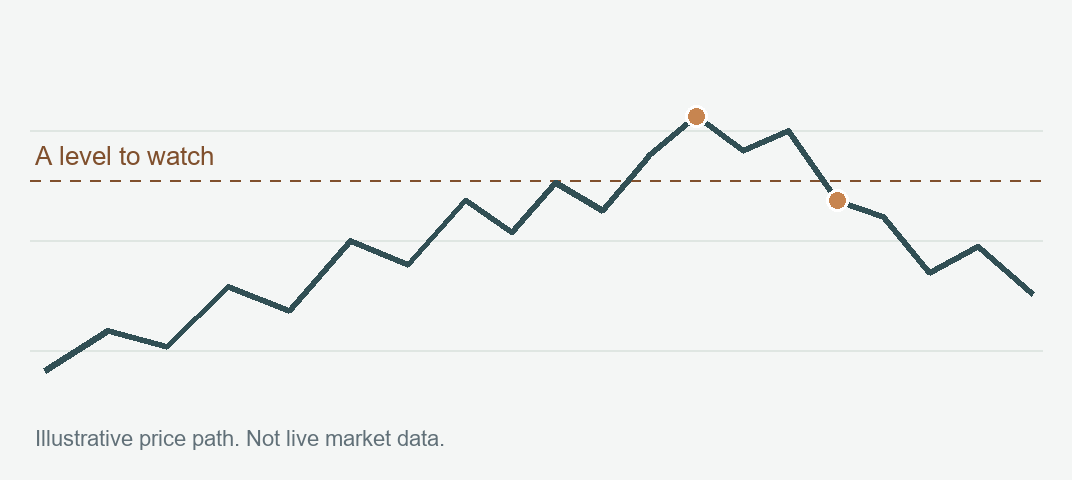
It’s easy to mark a previous high or low and start watching for a reaction. The more useful question is what you expect to observe there—and what would change your interpretation.
Support and resistance are areas where traders look for a possible pause or response. They are not promises. Price can move through a level, return to it, or spend time moving around it.
Look at the approach. Then the response.
Start by describing the move into the area. Was price moving through a range, returning after a move away, or approaching after a fast directional move? Keep the description separate from a prediction.
Then record what follows. Did price move beyond the area and remain there? Did it return to the prior range? Is there still too little information to describe a clear response?
A single touch—or a single indicator reading—doesn’t answer all of those questions. The timeframe and the surrounding price action belong in the same conversation.
Bring the indicator into the picture.
If you use an indicator, add what it showed to your notes. Ask what information it contributed and what still depended on reading price. We can explore how I use my custom indicators in context during one-on-one coaching.
You don’t need to turn every chart observation into a trade. The exercise is about making your reasoning clear enough to review.
Want to work through your chart questions?
Tell me what you’re learning and where you’d like personal guidance.
Ask about coachingFurther reading: CME Group’s introduction to support and resistance.
This is an educational example, not a current market outlook or a trade recommendation. Futures trading involves substantial risk of loss. No setup or indicator guarantees an outcome.